
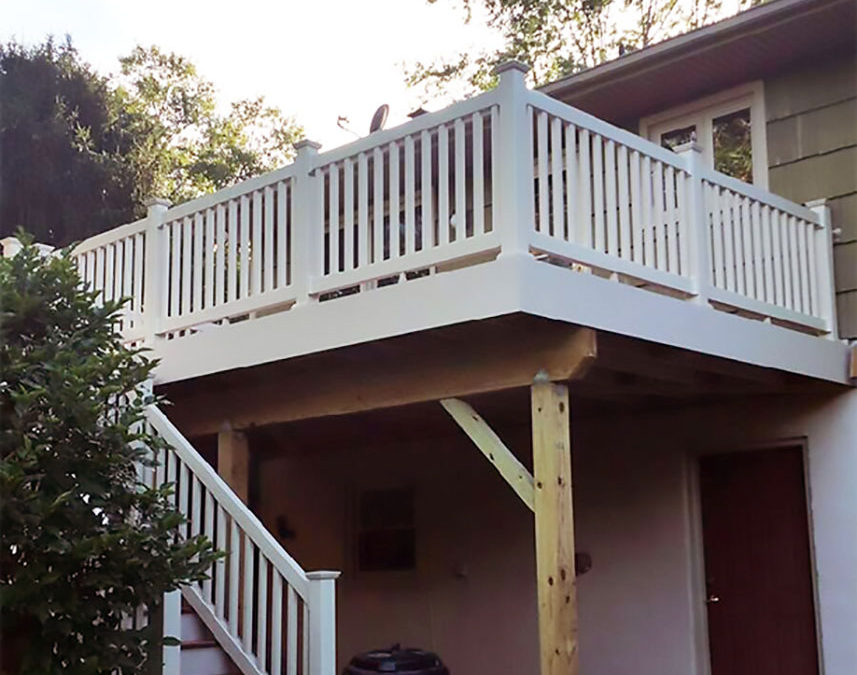
A deck is one of the few home improvements that gives you more living space without building an addition. In Maryland, where the weather cooperates for a solid seven to eight months of the year, an outdoor living area gets real use. But a deck that is designed well and built with the right materials is going to hold up and look good for decades. A deck thrown together with the cheapest lumber will be a maintenance headache within five years. Here is what we recommend after building decks across Maryland for over 20 years.
Composite vs. wood: the honest comparison
Pressure-treated lumber is the most affordable option for deck framing and decking boards. It handles insects and rot reasonably well, but it requires staining or sealing every two to three years to maintain its appearance and structural integrity. Left untreated, it grays, splinters, and deteriorates.
Composite decking costs more up front but requires almost no maintenance. It does not need staining, will not splinter, and resists fading better than it used to. The newer generation of composite products looks much more like real wood than the shiny, plastic-looking boards from 10 or 15 years ago. For Maryland homeowners who want to enjoy the deck without spending weekends maintaining it, composite is usually the better long-term investment.
Hardwoods like ipe and mahogany fall somewhere in between. They look beautiful, are naturally durable, and last a long time, but they are expensive and can be difficult to work with. They also need periodic oiling to maintain their color.
Layout ideas that make a difference
A rectangular deck attached to the back of the house is the default, and there is nothing wrong with it. But a few design choices can make the space feel more intentional and useful.
Multi-level decks work particularly well on homes with walkout basements, which are common across central Maryland. A lower level off the basement and an upper level off the main floor create two distinct outdoor zones without taking up additional yard space.
Built-in benches along the perimeter double as seating and railing, freeing up floor space for a table or grill. Integrated planters soften the edges and make the deck feel less like a platform and more like an outdoor room.
Railings, lighting, and the details
Cable railings and glass panels give a more open, modern look and preserve sightlines to the yard. Traditional wood or composite balusters provide a classic appearance. The choice is mostly aesthetic, but it changes the feel of the space significantly. Check out our project gallery to see examples of different railing styles on decks we have built.
Low-voltage LED lights built into stair risers, post caps, and under the railing make the deck usable after dark and add a layer of safety on stairs. These are easy to include during construction and much harder to add after the fact.
Permits and Maryland code requirements
In Maryland, most deck construction requires a building permit, especially for attached decks. The permit process involves submitting plans and scheduling inspections at key stages of construction. Deck height, railing requirements, footing depth, and ledger board attachment are all governed by code. A licensed Maryland contractor handles all of this as part of the project.
Deck maintenance by material type
Pressure-treated wood needs staining or sealing every two to three years. Composite decking needs periodic cleaning with soap and water, but no staining or sealing. Hardwoods need annual oiling if you want to maintain the color, or they can be left to weather to a silver-gray. Regardless of material, it is a good idea to clear leaves and debris regularly and check the structural connections once a year. If your deck connects to an area with older siding, the ledger board attachment is worth inspecting at the same time.
How much does a new deck cost in Maryland?
A basic pressure-treated wood deck in Maryland runs roughly $30 to $45 per square foot, including labor and materials. Composite decking increases that to about $50 to $75 per square foot. A 300-square-foot composite deck, which is a popular mid-size option, typically falls between $15,000 and $22,000 fully installed. The National Association of Home Builders tracks deck construction costs nationally and provides useful benchmarks.
Start designing yours
The best decks start with a conversation about how you want to use the space, not a product catalog. Request a consultation and we will come take a look at the site, talk through your ideas, and put together a plan that fits your home, your budget, and your lifestyle.
Frequently asked questions
How long does it take to build a deck in Maryland?
Most residential decks take one to three weeks to build, depending on size, complexity, and material lead times. Permit processing can add a week or two to the front end of the project.
Do we need a permit to build a deck in Maryland?
In most Maryland jurisdictions, yes. Attached decks and any deck above a certain height threshold (usually 30 inches) require a building permit. Your contractor should handle the permit application and inspections.
What is the best decking material for Maryland’s climate?
Composite decking handles Maryland’s humidity, temperature swings, and UV exposure better than most alternatives. It does not rot, warp, or splinter, and it requires very little maintenance. Pressure-treated wood is a more affordable option but requires regular upkeep.
References
National Association of Home Builders. (2024). Cost to Build a Deck.